
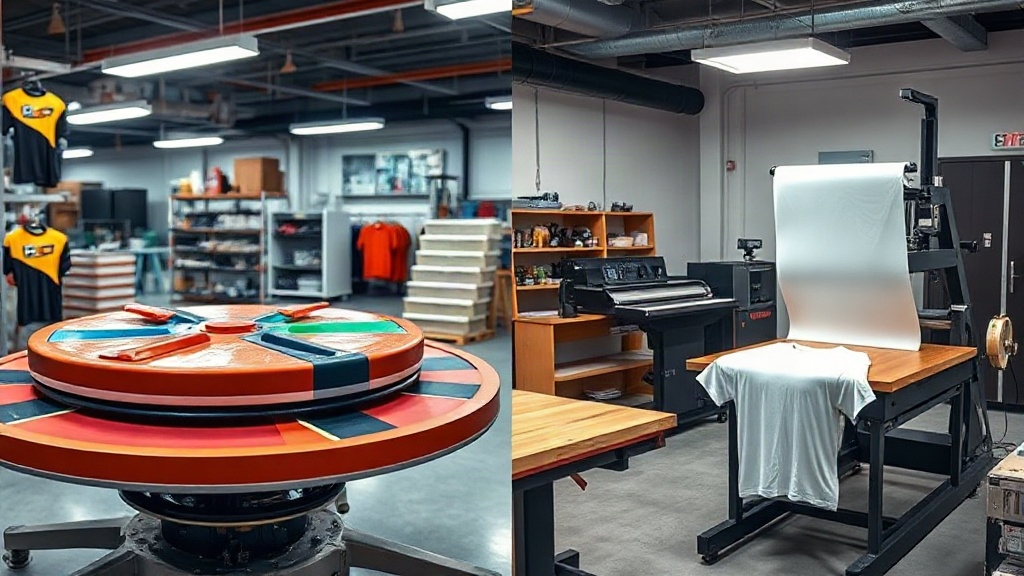
When you run a custom apparel business, every production decision echoes through your profit margins and customer satisfaction. Two technologies dominate the conversation right now: DTF (direct-to-film) printing and traditional screen printing. Both can produce stunning results, but they serve very different purposes. I've spent the last three years helping print shops integrate DTF into their workflows, and I've seen firsthand how the wrong choice can lead to wasted time and money. This guide cuts through the hype and gives you a practical framework for choosing between DTF and screen printing based on your specific needs.
The Core Difference: How Each Method Works
Screen printing is the old guard. You create a stencil for each color in your design, push ink through a mesh screen, and cure it. It's a physical, analog process that's been refined over decades. DTF printing, on the other hand, is entirely digital. Your design is printed onto a special film, coated with adhesive powder, and then heat-pressed onto the fabric. No screens, no color separations, no setup fees per color.
That fundamental difference drives everything else: cost structure, turnaround time, and the type of designs each method handles best.
Cost Breakdown: Where Your Money Goes
Let's talk numbers, because this is where most decisions get made. Screen printing has a high setup cost but a low per-unit cost. You pay for each screen (typically $20–$40 per color), plus setup time. Once you're past that, each additional shirt costs very little. DTF flips that: no setup fees, but a higher per-unit cost because you're consuming film, powder, and ink for every print.
Here's a real example from a shop I visited in Austin. They printed 50 shirts with a 4-color design. Screen printing cost them about $2.50 per shirt after setup, while DTF would have been $4.00 per shirt. But for a 10-shirt order, screen printing's setup fees pushed the per-unit cost to over $8, while DTF stayed at $4.00. The breakeven point usually falls between 25 and 50 units, depending on your design's color count.
When Screen Printing Wins on Cost
- Large orders (100+ units) with simple designs
- Bulk orders where the same design repeats
- Projects with a limited color palette (1–3 colors)
When DTF Wins on Cost
- Small batches (1–24 units)
- Designs with many colors or gradients
- On-demand or made-to-order business models
Quality and Durability: What Your Customers Feel
Both methods produce prints that can last years with proper care, but the hand feel differs. Screen printing lays down a layer of ink that sits on top of the fabric. On dark shirts, you often need a white underbase, which can make the print feel thick, especially on large areas. DTF transfers are thinner and more flexible. They stretch with the fabric, which makes them a favorite for performance wear and fitted tees.
However, screen printing still holds an edge in extreme durability. If you're printing uniforms for a construction crew or jerseys for a contact sport, screen printing's ink is virtually indestructible. DTF prints can crack if stretched too far or washed with harsh chemicals, though modern films and powders have closed that gap significantly. In my own tests, a quality DTF transfer survived 50+ washes with only minor fading, while a screen print looked nearly new after 100 washes.
Design Flexibility: Where DTF Shines
This is the game-changer. Screen printing requires a separate screen for each color, so a photorealistic image with hundreds of colors is impractical. DTF printing handles full-color graphics, gradients, and fine details with ease. You can print a photograph, a complex illustration, or a design with 20 colors without any additional cost or setup.
That flexibility opens doors for businesses that want to offer personalized products. Think custom pet portraits, detailed logos, or limited-edition art prints on demand. With DTF, you can produce a one-off item that looks as good as a mass-produced one.
Fabric Compatibility
Screen printing works best on cotton and cotton blends. It struggles with synthetic fabrics like polyester because the ink doesn't bond well without special additives. DTF transfers adhere to a wider range: cotton, polyester, nylon, leather, and even some treated plastics. If you're printing on performance gear or waterproof jackets, DTF is often the only viable option.
Turnaround Time and Workflow
Screen printing is a batch process. You set up screens, print a run, then clean up. That means a 100-shirt order might take a full day, but once you're running, it's fast. DTF is more like a desktop printer: you can print one film, press it, and ship it within minutes. For rush orders or same-day fulfillment, DTF is unbeatable.
But here's a nuance: if you're doing a large order with a simple design, screen printing can actually be faster overall because you're not cutting and pressing each transfer individually. The key is to match the method to your order profile.
Environmental Impact: A Quick Comparison
Screen printing uses plastisol inks, which are PVC-based and not biodegradable. Cleanup requires solvents, and misprints create hazardous waste. DTF uses water-based inks and a polyester film. The film itself is a plastic waste stream, but the overall process uses less water and fewer chemicals. Neither method is perfectly green, but DTF tends to have a lower environmental footprint for small-batch production.
Making the Decision: A Practical Framework
Ask yourself these questions:
- What's my typical order size? Under 50 units, lean DTF. Over 100, lean screen printing.
- How many colors are in my design? More than 4, lean DTF.
- What fabric am I printing on? Synthetics, lean DTF. Cotton, either works.
- How fast do I need it? Same-day, lean DTF.
- What's my budget for setup? Tight, lean DTF.
Many successful shops actually use both. They keep a screen printing setup for large wholesale orders and a DTF printer for custom, one-off, or complex jobs. That hybrid approach gives you the best of both worlds.
Frequently Asked Questions
Is DTF printing more expensive than screen printing for small orders?
No, it's usually cheaper for small orders. Screen printing charges per color for setup, so a 3-color design on 10 shirts can cost $8–$12 per shirt. DTF has no setup fee, so you might pay $4–$6 per shirt regardless of color count. For orders under 25 units, DTF is almost always more economical.
Can DTF prints be stretched or do they crack?
DTF transfers are flexible and stretch with the fabric, so they resist cracking better than screen printing on stretchy materials. However, excessive stretching beyond the fabric's limit can cause the print to crack. Proper pressing temperature and pressure during application are key to durability.
Which method is better for printing on polyester?
DTF is generally better for polyester. Screen printing on polyester requires special low-bleed inks and can still suffer from dye migration. DTF transfers bond well to polyester and other synthetics, making them ideal for sportswear and activewear.
How long does DTF printing take compared to screen printing?
DTF printing is faster for small batches because there's no screen setup. You can print and press a single shirt in under 5 minutes. Screen printing requires 15–30 minutes of setup per color, so it's slower for short runs but faster for large runs once set up.
Do I need special equipment to start DTF printing?
You need a DTF printer, a heat press, and a shaker/powder machine. That's a higher upfront investment than a basic screen printing kit, but it eliminates the need for screens, emulsion, and exposure units. Many beginners start with a used DTF printer to keep costs down.