
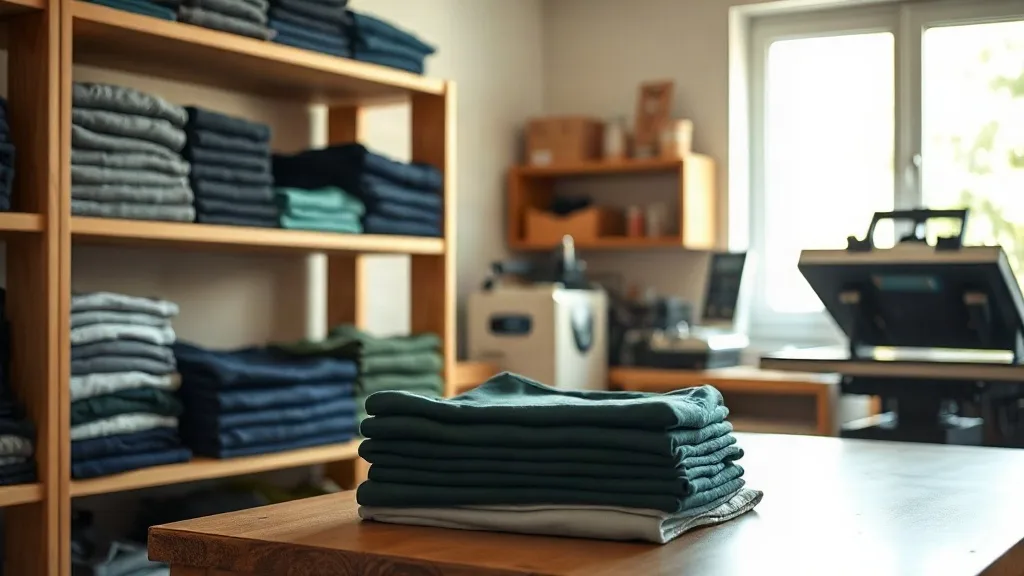
Behind every heat press in a working shop sits a shelf nobody likes to talk about. It holds the blanks that didn't move, the samples printed with a logo the client later changed, and the shirts with a pinhole or a faint stain that never made it to the sales floor. Most owners treat that shelf as a sunk cost, something to write off at the end of the year. But with a roll of film and a few minutes at the press, those same garments can become some of the most profitable items you sell. That is the quiet advantage of dtf transfers: they let you rescue inventory you already paid for, without ordering new stock or waiting on a supplier.
This is not another piece about color management or press settings. It is about the business of what to do with the garments you already own. If you run a small shop, a side business, or a craft operation, the dead-stock shelf is probably your largest untapped margin. Let's walk through how to convert it.
Why Dead Stock Is a Bigger Problem Than Most Shops Admit
When you buy blanks in bulk to hit a price break, some of it inevitably sits. A size run that sold unevenly leaves you with extra XXLs. A client cancels a 24-piece order after you've already received the garments. A dye lot turns out slightly different from the swatch. None of these are disasters on their own, but together they add up to real money tied up in fabric that generates nothing.
The traditional fix is a clearance bin or a donation receipt. Both recover a fraction of what you spent. A dtf transfer changes the math because the cost per rescued garment is tiny. A single transfer, a few seconds on the press, and a blank that cost you six dollars becomes an item you can sell for twenty-five or thirty. That is a far better return than any discount rack.
The Three Categories of Rescue-able Stock
Before you print anything, sort your shelf into three groups. Each one needs a slightly different approach.
- Clean blanks with no flaws. These are the easiest. They just need a design that fits the color and size. Treat them like fresh inventory and price them normally.
- Cosmetically imperfect garments. A faint mark near the hem, a loose thread, a slightly off seam. These are perfect candidates for a design placed to cover the flaw, or for a "seconds" price tier.
- Old samples and branded stock. Shirts printed with a logo that no longer applies. If the old print is small, you can often cover it entirely with a new transfer. If it's large, consider cutting the garment into patches or tote bags instead.
Matching Designs to the Stock You Actually Have
The mistake most shops make is designing first and then hunting for a garment that fits. Flip the order. Look at your shelf, note the colors and sizes you have most of, and design for those constraints. A stack of ten navy mediums is a clear signal: build a small capsule around navy mediums.
Color matters more than people expect. A design that looks sharp on white cotton can look muddy on heather grey or forest green. Before committing to a run, print a single test transfer and press it onto the actual garment. This takes five minutes and saves you from wasting a whole batch. Keep a small notebook of which designs worked on which blank colors, and you'll build a reference you can't get from any supplier.
Placement as a Cover-Up Tool
If a garment has a flaw, placement is your friend. A stain near the chest pocket area can be covered by a design positioned slightly higher or offset to one side. A pinhole near the hem can disappear under a small logo or a border element. This is where dtf transfers shine over other decoration methods, because you can print a one-off design at the exact size and position you need, with no minimum order and no screen setup.
Measure the flaw, measure the design, and give yourself a margin of at least half an inch on every side. Anything tighter and the flaw may peek out after a wash. If the flaw is larger than your design can cover, it belongs in the seconds tier, not the cover-up tier.
The Economics of Rescuing Versus Reordering
Let's put real numbers on this, because the case for rescue work is stronger than most owners realize. Suppose you have 40 blank t-shirts sitting on a shelf. You paid seven dollars each, so 280 dollars is tied up. If you sell them at a clearance price of five dollars, you recover 200 dollars and lose 80. If instead you spend roughly a dollar per garment on film, powder, and press time, and sell them at 24 dollars each, you generate 960 dollars in revenue against 320 dollars in total cost. The margin is not just better, it is a different category of business.
Of course, not every rescued garment sells at full price. Some will move slowly. But even at a discounted 18 dollars, the numbers still work comfortably. The point is that the blank is already paid for. Any revenue above the transfer cost is close to pure profit, and that changes how you think about the shelf.
When Not to Rescue
Some stock is not worth saving. Garments with structural damage, heavy staining, or a print so large it cannot be covered should go to donation or rags. The time you spend fighting a hopeless blank is time you could spend on a garment that will actually sell. Set a simple rule: if the fix takes more than ten minutes or the flaw is larger than a credit card, skip it.
Building a Small Capsule Around What You Have
Instead of treating rescued stock as random one-offs, group it into a small themed capsule. This is how you turn a pile of odds and ends into something that feels intentional and sells better. Pick a theme that fits your audience: a local landmark series, a set of workwear-inspired graphics, a run of simple typographic designs. Print each theme on the blanks you have in that color family.
The capsule approach has a practical benefit beyond marketing. It gives you a reason to print multiple designs at once, which means less setup time and less wasted film. It also makes it easier to photograph and list the items as a collection rather than as a random assortment. Buyers respond to coherence, even when the underlying stock is mismatched.
Pricing the Capsule
Price rescued items in line with your regular retail, not below it. The customer does not know the blank came from a shelf, and there is no reason to signal that. If a garment has a visible flaw that the design does not fully cover, price it as a seconds item and say so honestly in the listing. Transparency builds trust and prevents returns, which are far more expensive than a slightly lower price.
Where to Source Transfers If You Don't Print In-House
Not every shop wants to run a printer, cure powder, and manage film inventory. If you are a reseller, a boutique, or a small operation without a DTF setup, you can still do rescue work by ordering transfers from a supplier. This is where searching for dtf transfers near me becomes useful, because local or regional suppliers often ship faster and let you order in smaller quantities. For a rescue project, speed matters: you want to turn that shelf into sellable stock while the season still fits.
When ordering from a supplier, ask about their turnaround time and minimum order. Some will print single designs, which is ideal for one-off cover-ups. Others require a minimum quantity, which works better for a capsule where you plan to print several of the same design. Match the supplier to the project, not the other way around.
What to Check Before You Commit
Order a small sample first, especially if you are working with unusual blank colors. Press the sample onto a spare garment from your shelf and wash it once. If the transfer holds and the color looks right, proceed with the full run. This single test prevents the most common rescue failure: a design that looked great on screen but disappears on a dark or textured blank.
A Simple Workflow for Rescue Days
Set aside one day a month for rescue work. Sort the shelf, pick the designs, print the transfers, and press them in a single batch. Batching keeps the press hot and your attention focused, which is far more efficient than squeezing one rescue in between other jobs. By the end of the day you should have a small stack of finished, photograph-ready garments.
Photograph them the same day, while the press marks are fresh and the colors are clean. List them the following morning. The whole cycle takes a day and turns a forgotten shelf into a small revenue stream that repeats every month. Over a year, that adds up to a meaningful line on your profit sheet.
Frequently Asked Questions
Can I put a DTF transfer over an existing print to cover it?
Sometimes, but it depends on the old print. A thin, flat screen print can often be covered if the new transfer is larger and the old print has no thick texture. A raised or cracked print will show through, so test on a single garment first. If the old print is thick, the better option is to place the new design elsewhere on the garment.
How much does it cost to rescue a single blank with a transfer?
For a shop printing in-house, the material cost per garment is usually around one to two dollars, depending on design size and film usage. Add your press time and you are still well under the cost of a new blank. For shops ordering from a supplier, the cost per transfer varies, so compare against the resale value of the finished item before committing.
Will a rescued garment sell for the same price as new stock?
If the garment is clean and the design fully covers any flaw, yes. Customers buy the finished item, not the history of the blank. If a flaw remains visible, price it as a seconds item and describe it honestly. The small discount is worth avoiding a return.
What is the best design size for covering small flaws?
A design that extends at least half an inch beyond the flaw on every side gives you a safe margin. For a stain the size of a coin, a design of three to four inches works well. For larger flaws, go bigger or move the design to a different part of the garment entirely.
Do rescued garments need special washing instructions?
Treat them the same as any DTF-printed item. Wash inside out in cold water and avoid high heat in the dryer. If you are selling them, include a small care card. It protects the print and signals that you care about the product, which matters for repeat business.