
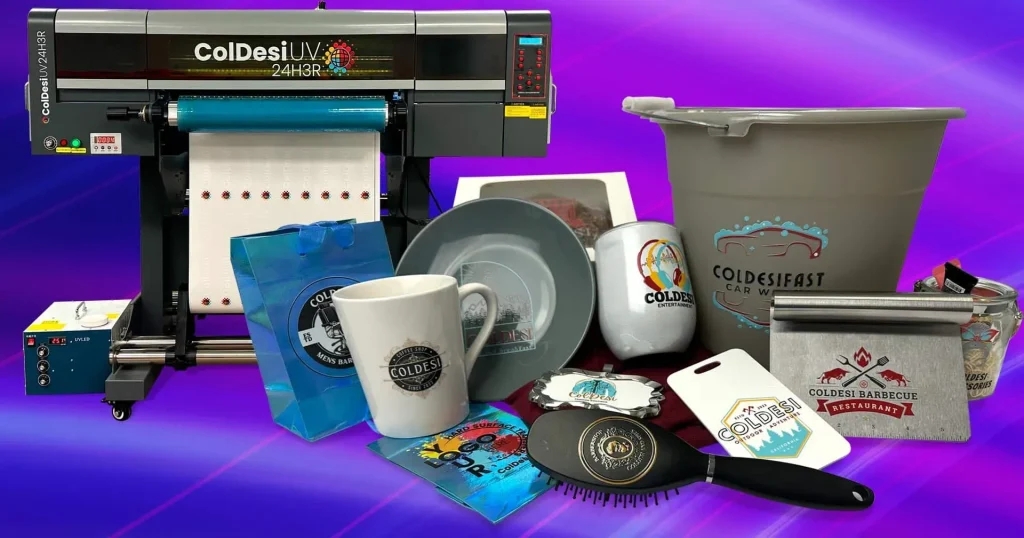
UV DTF printing, or UV Direct to Film printing, is revolutionizing the way businesses approach custom printing in an increasingly competitive marketplace. By utilizing advanced UV printing technology, this innovative method seamlessly transfers vibrant designs onto a variety of substrates, making it ideal for apparel, promotional products, and signage. The efficiency of UV DTF printing not only enhances productivity but also supports sustainable printing practices, allowing companies to reduce their environmental footprint. With its ability to produce high-quality prints quickly and accurately, it’s no surprise that graphic design for printing is buzzing with excitement over this technology. As we delve deeper, we will explore the intricacies of UV DTF printing and its myriad applications that cater to diverse industries.
Known variously as direct-to-film technology, UV film printing, or digital UV printing, UV DTF printing exemplifies a modern approach to print solutions. This method incorporates unique principles that facilitate customized designs, empowering graphic designers to bring their visions to life efficiently. As industries increasingly prioritize innovative printing techniques, embracing processes like UV DTF not only boosts productivity but also mirrors global shifts towards eco-friendly printing solutions. Moreover, with its growing accessibility, UV DTF technology is becoming a staple for businesses keen on offering standout products in crowded markets. Understanding these alternative terminologies can provide a broader perspective on the potential and versatility of this dynamic printing innovation.
Understanding UV DTF Printing Technology
UV DTF (Direct to Film) printing technology represents a significant advancement in the field of custom printing. By utilizing innovative UV-curable inks, this technique allows for detailed designs to be printed directly onto a film before being transferred to the desired substrate. The defining feature of UV DTF lies in its ability to produce vibrant colors and sharp details that remain intact over time. This method opens up fresh avenues for graphic designers who wish to create unique and impactful visual solutions across a variety of materials.
The process begins with meticulous design creation, where the art is carefully formulated using sophisticated graphic design software. Following this, the design is printed onto transfer film using state-of-the-art UV printers, which cure the inks instantly with UV light. This guarantees high-quality output with excellent durability, making it not just appealing but also functional for long-term use. The potential applications are vast, from apparel graphics to intricate promotional items, showcasing the remarkable versatility of UV DTF printing.
The Printing Process: Steps to Success
The journey of UV DTF printing seamlessly integrates several stages, all culminating in the production of a high-quality printed item. Initially, the design creation involves using advanced graphic design software, ensuring that all elements are crafted specifically for print. Graphic designers leverage tools like Adobe Illustrator, which allow for precision and creativity, producing stunning visuals that are ready for the next stages of production.
Once designed, the transfer film is prepared for printing. Utilizing the UV printing technology, the inks are applied and cured, which enhances adhesion significantly. This curing process ensures that the prints are durable and resistant to wear and tear. Following this, the printed film is carefully aligned with the substrate, ready for the transfer process where heat and pressure finalize the application, meticulously encapsulating every design detail.
Recent Innovations in UV DTF Printing
In the rapidly evolving landscape of printing, UV DTF technology is witnessing continuous innovations that enhance its appeal and functionality. Recent advancements in ink formulations have led to the development of environmentally friendly options that not only meet the needs of high-quality production but also adhere to sustainable printing practices. Such innovations are vital as businesses increasingly recognize the importance of reducing their environmental impact.
The machinery involved in UV DTF printing has also benefitted from technological strides, with newer models offering faster printing speeds and enhanced capabilities. These improvements allow printers to fulfill large orders efficiently without compromising on the quality that customers expect. This alignment of efficiency and environmental consciousness positions UV DTF printing at the forefront of modern printing solutions.
Exploring the Benefits of UV DTF Printing
The benefits of UV DTF printing are extensive, making it a favored choice among businesses targeting versatility and quality in their product offerings. One of the primary advantages of this method is its adaptability to a wide array of materials, including textiles, plastics, and metals. This means that graphic designers and businesses can explore diverse projects without being restricted by material limitations, fostering creativity and innovation.
Moreover, the speed and efficiency of the UV DTF printing process are unparalleled. The rapid curing of UV inks enables a quick turnaround for custom jobs, essential for businesses looking to meet urgent market demands. Additionally, the durability of the prints allows them to withstand environmental elements and physical wear, ensuring that they maintain their visual appeal over time, an indispensable benefit for promotional items and apparel.
Sustainability in UV DTF Printing
As sustainability becomes paramount in modern manufacturing, UV DTF printing is emerging as a technology keen on minimizing environmental impact. Many companies are now opting for eco-friendly inks and materials, reducing waste and lowering their carbon footprint. This shift toward sustainable printing practices is not only beneficial for the environment but also appeals to consumers who increasingly favor brands that prioritize eco-consciousness in their operations.
Implementing sustainable practices in UV DTF printing involves integrating green technologies and materials into every stage of the process. From selecting biodegradable inks to optimizing machinery energy use, the companies embracing this shift are not only improving their market appeal but are also setting a standard for others in the industry to follow. This commitment to sustainability is likely to enhance customer loyalty as consumers become more aware of the environmental ramifications of their purchases.
Future Trends in UV DTF Printing
Looking ahead, the future of UV DTF printing is bright as technological advancements continue to evolve the parameters of what’s possible in the printing industry. As printing technology develops, we can expect advancements in print resolutions, increasing the level of detail and vibrancy achievable in each project. This technology will further enable graphic designers to explore more intricate designs that were previously challenging to execute.
Additionally, the focus on sustainability will likely deepen, driving innovation toward more ecologically responsible materials and processes. Companies that adopt UV DTF printing will not only benefit from high-quality production capabilities but will also play a significant role in shaping a more sustainable future in printing. The combination of innovation and environmental consciousness positions UV DTF printing as a crucial player in the evolution of the printing landscape.
Frequently Asked Questions
What is UV DTF printing and how does it differ from traditional printing methods?
UV DTF printing, or UV Direct to Film printing, is an advanced technique that uses UV-curable inks to print designs onto a special film, which can then be transferred to various substrates. Unlike traditional printing methods, UV DTF offers vibrant colors, superior durability, and the ability to print on diverse materials such as textiles, wood, and metal.
What are the key benefits of using UV DTF printing for custom printing needs?
UV DTF printing provides several advantages for custom printing, including versatility across materials, fast production speeds due to quick curing times, and exceptional durability of prints. This makes it a preferred choice for businesses wanting high-quality, long-lasting products.
How does the UV DTF printing process work from design to creation?
The UV DTF printing process starts with creating a design using graphic design software, followed by printing the design onto a transfer film using a UV printer. The printed film is then aligned with the target substrate, applying heat and pressure to transfer the image. Finally, the item undergoes finishing touches to ensure quality.
Is UV DTF printing considered a sustainable printing practice?
Yes, UV DTF printing is increasingly embraced for its sustainable practices. Many companies utilize eco-friendly inks and materials within the UV DTF printing process, helping to minimize environmental impact and reduce carbon footprints, aligning with the growing demand for sustainability in the printing industry.
What types of projects are ideal for UV DTF printing?
UV DTF printing is ideal for a wide range of projects, including apparel, promotional goods, signage, and custom merchandise. Its flexibility in printing on various substrates makes it suitable for both small businesses and larger enterprises aiming for quality and customization.
What innovations are shaping the future of UV DTF printing technology?
Recent innovations in UV DTF printing include advancements in ink formulations that enhance durability and environmental responsibility. Additionally, improvements in printing machinery allow for faster production times while maintaining high-quality output, making UV DTF an increasingly appealing choice for businesses.
| Key Point | Details |
|---|---|
| Overview | UV DTF printing is a modern technique essential for competitive business printing. |
| Definition and Process | Involves printing on film using UV-curable inks for transfer onto various materials. |
| Steps Involved | 1. Design Creation: Crafting with software. 2. Printing on Film: Using UV printers for vibrant images. 3. Transferring the Design: Aligning and applying heat/pressure. 4. Finishing Touches: Quality checks and packaging. |
| Recent Developments | – Increased adoption among SMEs. – Innovations in inks and machinery. – Sustainability focus in practices. |
| Benefits | – Versatility across materials. – Speed and efficiency in production. – Durability and resistance to fading and scratching. |
Summary
UV DTF printing represents a significant evolution within the printing industry, enabling businesses to deliver high-quality and customizable products seamlessly. This state-of-the-art method, which combines advanced UV technology with versatile applications, allows for stunning prints on a wide range of substrates. As the printing landscape continues to shift towards efficiency and creativity, UV DTF printing stands out as a sustainable solution that meets modern demands. The future looks bright for organizations that adopt this innovative technology, propelling them to new heights and allowing them to fulfill customer desires for personalized, durable products.