
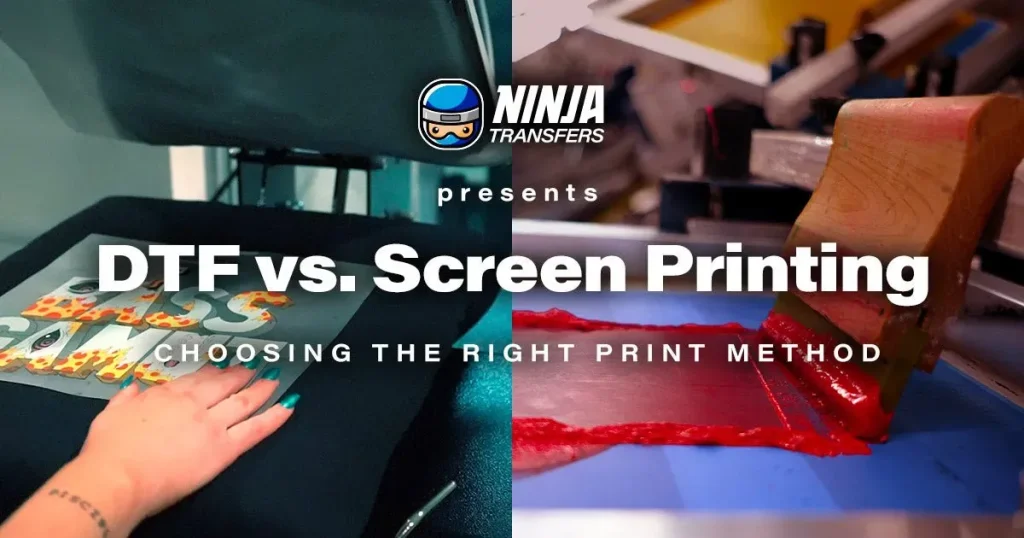
When it comes to custom apparel printing, many businesses often find themselves weighing the options of DTF vs Screen Printing. Direct to Film (DTF) printing has become a popular choice for its ability to produce vibrant, intricate designs with ease, while screen printing offers traditional advantages, particularly in bulk production. Understanding the differences between these two methods is crucial for making an informed decision that aligns with your production needs and customer expectations. This guide will delve into the benefits of DTF printing and the screen printing advantages, providing insights on which method best suits various printing projects. With print on demand services booming and the landscape of garment decoration evolving, it’s essential to grasp the nuances of these printing techniques to elevate your business.
In the world of garment decoration, the debate between Direct to Film (DTF) printing and traditional ink-on-mesh techniques, commonly known as screen printing, continues to capture the attention of entrepreneurs and designers alike. Both methods offer unique features and cater to different business requirements, making it imperative to understand their respective strengths and limitations. As online retail and custom apparel demand grow, the choice between these printing options will significantly influence how companies approach their product offerings. This analysis will uncover the advantages of DTF printing over its older counterpart, as well as the continued relevance of screen printing in certain market segments. By examining facets like production efficiency, print quality, and cost-effectiveness, businesses can better decide which printing technique aligns with their operational goals.
What is DTF Printing?
Direct to Film (DTF) printing is a cutting-edge printing method that offers a modern solution to custom apparel decoration. In this process, designs are printed onto a special film, which is then transferred onto fabrics using heat application. This innovative technique allows for exceptional detail in designs, vibrant colors, and the ability to print on a variety of fabrics, including cotton and polyester blends, making it increasingly popular for businesses in the apparel industry.
One of the key reasons for DTF printing’s popularity is the versatility it provides. Unlike traditional screen printing, which can be cumbersome with high setup costs, DTF allows for quick design changes and eliminates minimum order requirements. Small businesses and startups can thus test new designs and ideas without the burden of a large initial investment or bulk orders, giving them the freedom to experiment creatively and respond swiftly to market demands.
Advantages of DTF Printing Over Screen Printing
When comparing DTF printing to screen printing, one of the standout advantages of DTF is its ability to deliver highly detailed and complex designs with ease. Screen printing can be limiting, especially with intricate graphics or multiple colors, as each color typically requires a separate screen. In contrast, DTF’s digital method can replicate these complexities efficiently, providing superior print quality. This means businesses can cater to more diverse client needs without worrying about the constraints usually associated with traditional methods.
Flexibility in design options is another major strength of DTF printing. While screen printing excels in high-volume production, it often falls short in terms of adaptability for smaller runs or niche designs. DTF allows companies to offer personalized items and on-demand services, appealing to customers looking for unique, one-off products. This capability caters to the growing demand for customization in the apparel industry, making DTF an attractive option for contemporary businesses.
Exploring Screen Printing Benefits
Screen printing has remained a dominant method in the apparel printing industry, primarily due to its efficiency in producing large quantities of garments at a lower cost per piece. Once the initial setup is done, adding more items to an order becomes remarkably inexpensive. This characteristic makes screen printing a go-to solution for companies that anticipate sustained demand for specific designs, especially in bulk order scenarios where tight deadlines need to be met.
Additionally, screen printing is well-known for its ability to create rich color saturation. The thicker inks used in screen printing give designs bold and vibrant finishes, which are particularly effective for items requiring solid blocks of color. For brands emphasizing visibility and impactful designs, screen printing provides an unrivaled depth of color that can dramatically enhance brand identity.
Limitations of Screen Printing
Despite its strengths, screen printing is not without its challenges. A primary limitation is the extensive setup time required for new designs, which can be a drawback for businesses looking to maintain flexibility in their offerings. Each new design necessitates creating new screens, which can involve significant time and costs, making it less efficient for shorter runs or rapidly changing customer preferences.
Furthermore, intricacy in designs can pose a problem for screen printing. While good for bold graphics, screen printing struggles with fine details and gradients, rendering it less favorable for projects that require precision or detailed artistry. As the demands of custom apparel printing evolve towards complexity and personalization, screen printing may not meet the expectations of businesses looking to innovate.
DTF vs. Screen Printing: Cost-Effectiveness Analysis
Cost-effectiveness is a critical consideration when choosing between DTF printing and screen printing. DTF printing is especially beneficial for businesses that operate on a smaller scale or experiment with new designs frequently, as there are no minimum order requirements. This method allows for a more manageable investment without compromising on quality, helping businesses maximize their resources while appealing to diverse consumer demands.
Conversely, screen printing becomes increasingly cost-effective as order size increases. For businesses that are able to commit to larger quantities, the per-unit cost significantly decreases, making screen printing a smart choice for sustaining long-term production runs. Companies that benefit from this method often utilize it for promotional activities or events where large volumes of specific designs are required, ensuring they receive value for their investment.
Making the Right Choice: DTF vs. Screen Printing for Your Business
Choosing between DTF printing and screen printing ultimately hinges on the unique needs of your business. For brands emphasizing versatility and high-quality prints with a focus on small runs, DTF offers the agility necessary to adapt to trends and customer preferences. Its rapid setup times and lack of minimum orders empower businesses to maintain creative freedom and experimentation without significant financial risk.
On the other hand, if your business model revolves around high-demand, consistent orders, screen printing may prove more advantageous. The efficiency of bulk printing along with the rich saturation potential makes it suitable for firms targeting volume sales while maintaining cost-efficiency. In analyzing these factors, it’s essential to align your printing method with your business goals and anticipated customer demands.
Frequently Asked Questions
What are the main differences between DTF vs screen printing for custom apparel printing?
The primary differences between DTF (Direct to Film) printing and screen printing lie in the setup process, design detail, and cost-effectiveness. DTF printing is more flexible, allowing for detailed and colorful designs on various fabrics without large minimum order requirements. In contrast, screen printing is more efficient for bulk orders but has limitations in handling intricate designs and requires extensive setup.
What are the screen printing advantages compared to DTF printing?
Screen printing advantages include more vibrant color saturation due to thicker inks, cost efficiency for large runs, and a long-lasting quality that is highly durable under heavy wear. It is a well-established method for producing high volumes of apparel quickly, making it suitable for businesses with consistent demand.
What are the DTF printing benefits for small businesses in the apparel industry?
DTF printing benefits small businesses by offering high detail and versatility without requiring large minimum orders. It has a shorter setup time compared to screen printing, allowing for quick design changes and the ability to experiment with various designs, which is crucial for businesses looking to test the market.
How does DTF vs screen printing compare in terms of print quality?
In terms of print quality, DTF printing excels at producing intricate details and vibrant colors without the limitations of multiple screens that screen printing faces. While screen printing offers bold colors suitable for designs with solid blocks, it struggles to replicate fine details as effectively as DTF.
Is DTF printing more cost-effective than screen printing for print-on-demand services?
Yes, DTF printing is generally more cost-effective for print-on-demand services, especially for small order sizes. It eliminates the need for large upfront costs associated with screen printing setups, making it ideal for businesses that require flexibility and low inventory risks.
What types of designs work best with DTF vs screen printing methods?
DTF is best suited for intricate designs that require multiple colors and fine details, making it ideal for custom artwork. Screen printing, however, works best for simpler designs or those with fewer colors, as it produces more consistent results on bulk orders, particularly when large blocks of color are required.
| Aspect | DTF Printing | Screen Printing |
|---|---|---|
| Definition | Innovative printing technique that transfers designs onto film for heat pressing on fabrics. | Traditional method using a stencil to apply ink on fabrics through a mesh screen. |
| Advantages | 1. High detail and color versatility. 2. No minimum order requirement. 3. Less setup time. 4. Durable prints that withstand multiple washes. | 1. Cost-effective for bulk orders. 2. Rich color saturation with thick ink. 3. Long-lasting durability. |
| Limitations | Can be less efficient for very large runs; technology still emerging; may have a higher initial setup cost for small businesses. | Less flexible; requires time for setups; can become costly for small or intricate designs. |
| Best Use Case | Ideal for small businesses with diverse design needs, quick production time, and intricate designs. | Best suited for large contiguous orders needing consistent quality and efficiency. |
Summary
DTF vs. Screen Printing is a critical consideration for businesses in the apparel decoration industry. When deciding between these two printing methods, it is essential to evaluate your specific needs, particularly in terms of order volume, design complexity, and budget constraints. DTF printing stands out for its versatility and intricate detail capabilities, making it ideal for small runs and diverse fabrics. In contrast, screen printing is remarkably efficient for large orders where bold, saturated colors are desired. Understanding the strengths and limitations of each method will enable you to choose the best option that aligns with your business objectives.